What Is Lordosis?
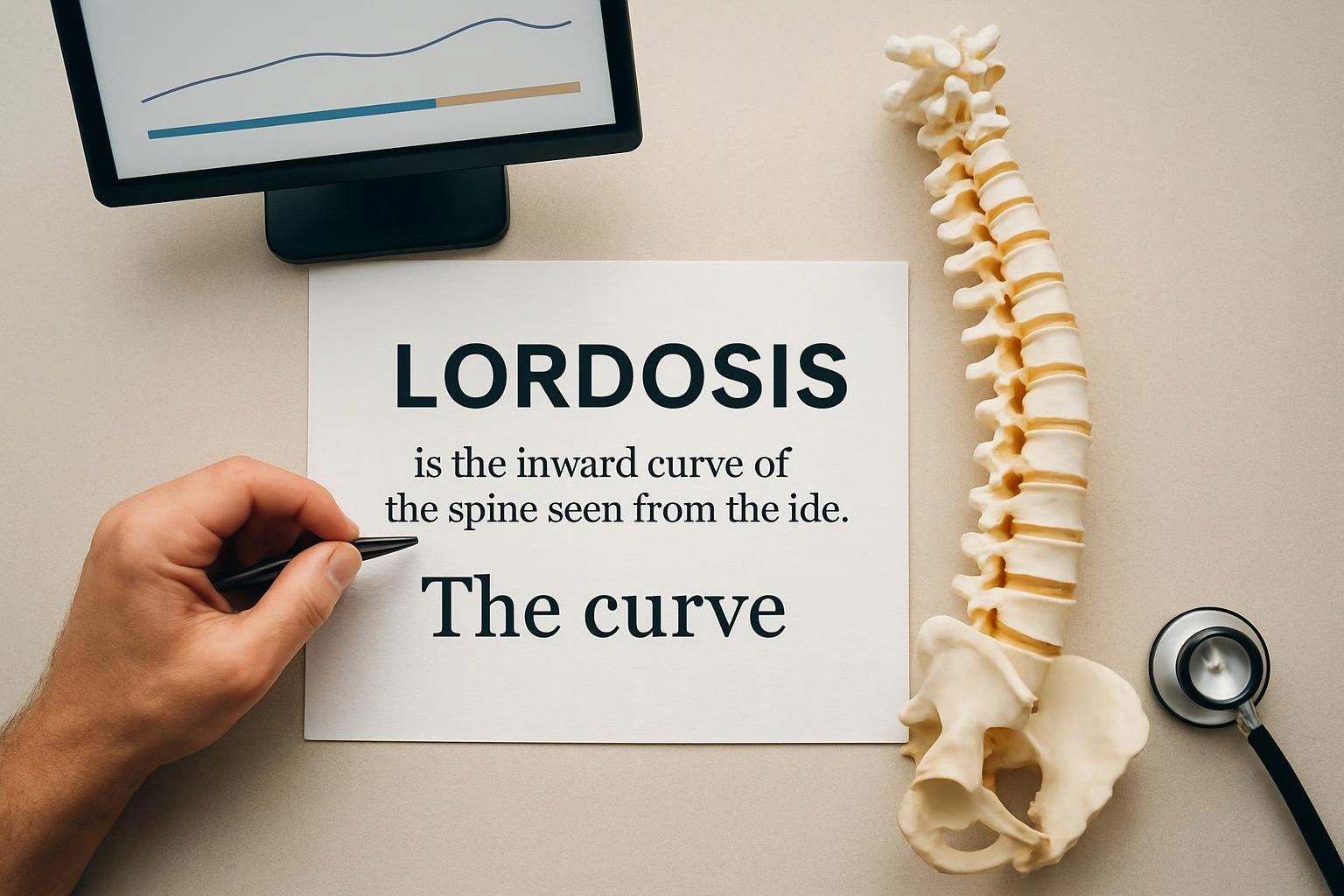
Lordosis is the inward curve of the spine seen from the side. The curve occurs naturally in the neck and lower back. The term also describes a curve that appears more pronounced than expected, often called excessive lordosis. Its appearance can vary with your posture and body position.
Quick Facts About Lordosis
- Category
- Spinal alignment
- Used for
- Describing posture and spinal shape
- Common confusion
- Excessive curve versus natural curve
- Often discussed with
- Posture Correction
Key Takeaways About Lordosis
- Excessive lordosis is different from a natural spinal curve.
- Body position can change how the curve looks.
- Lordosis isn't the same as a sideways spinal curve.
How Lordosis Works
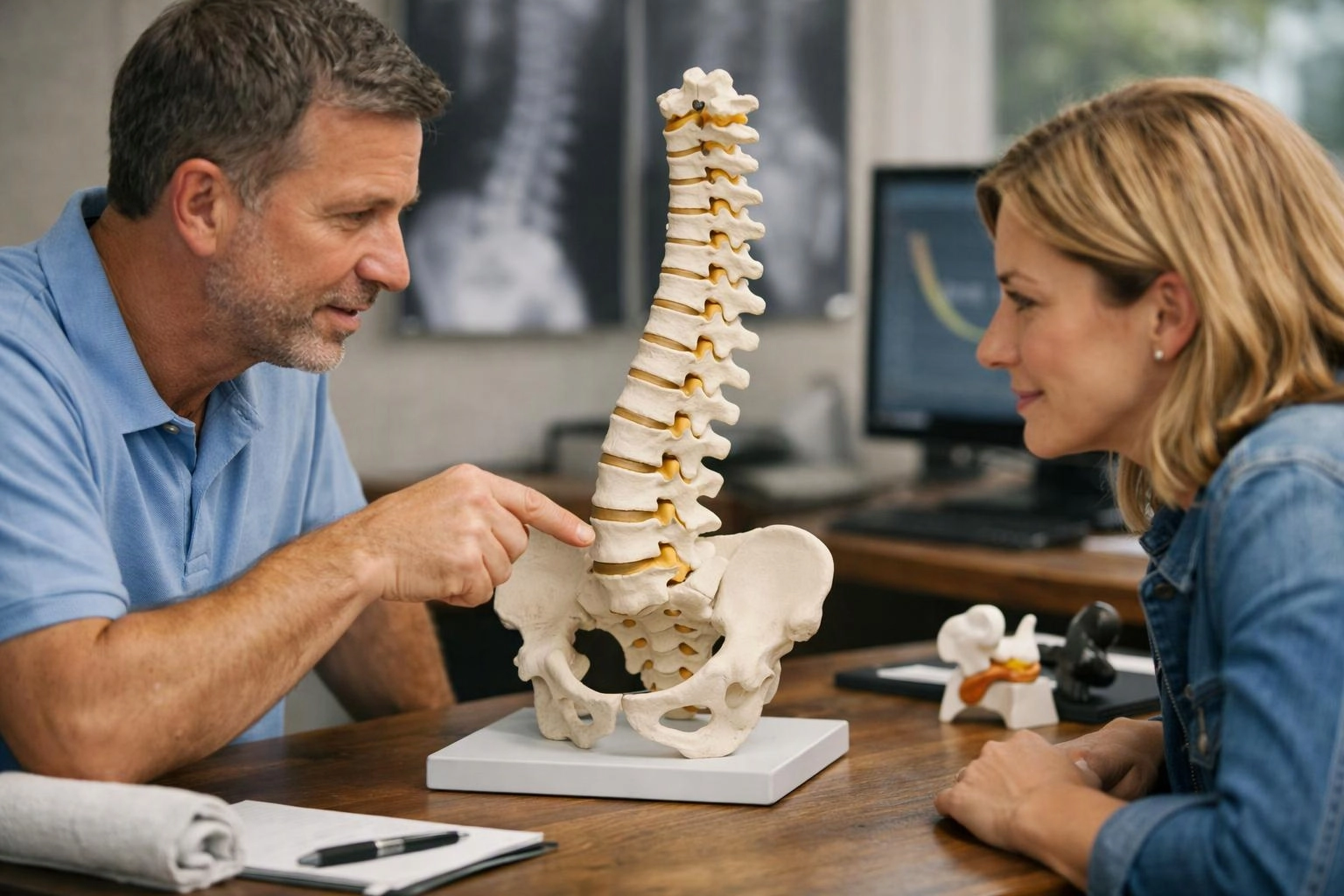
Lordosis describes part of the spine's shape as the body moves and supports weight. The curve changes as you bend, stand or shift your position. Your pelvis also affects the appearance of your lower back. Related service: Posture Correction.
Related glossary terms: Lumbar Spine, Pelvic Tilt, Range of Motion.
A forward pelvic tilt can make the lower back curve look more pronounced. Muscles around your hips and trunk help control how your pelvis and spine move. A posture seen while standing may look different while sitting or bending.
Clinicians describe the curve in context, including how you move and whether you have discomfort. A pronounced curve doesn't always mean you have pain. The shape of your spine is only part of the picture, and posture can change with position.
From the Arrowhead Clinic Chiropractor Savannah team
When we discuss lordosis during posture correction, we consider how your lower back and pelvis move together. We also ask about your daily activities and any discomfort. A curve's appearance alone doesn't tell us how your posture affects you.
Lordosis in Practice: A Real-World Example
A person who works at a desk notices a pronounced lower back curve while standing. During a posture correction visit, the chiropractor discusses how the person's pelvis and back move in different positions.
Related Services
Related Terms
Lumbar Spine
The lumbar spine is the section of the backbone between the rib cage and the pelvis.
Pelvic Tilt
Pelvic tilt is the position or movement of the pelvis as it tips forward or backward.
Range of Motion
Range of Motion is the extent of movement available at a joint in a particular direction.
Vertebra
A vertebra is a bone that forms part of the spine and helps support the body.
Arrowhead Clinic Chiropractor Savannah
Have Questions About Lordosis?
Contact Arrowhead Clinic Chiropractor Savannah for practical guidance on Lordosis and related chiropractor work in Savannah.