
What Is an Orthopedic Examination?
An orthopedic examination is a physical assessment that checks how the muscles, joints and bones work. A clinician observes movement and uses hands-on tests to look for signs of discomfort or limited function. The findings help the clinician understand a concern and decide what further assessment may be useful.
Quick Facts About Orthopedic Examination
- Category
- Physical assessment
- Used for
- Investigating movement concerns
- Common confusion
- Not a diagnosis by itself
- Also called
- Orthopedic Exam, Musculoskeletal examination
- Often discussed with
- Pediatric Chiropractic Care
Key Takeaways About Orthopedic Examination
- The exam focuses on the body's movement system.
- Your description of symptoms helps guide the assessment.
- An examination isn't the same as a diagnosis.
How Orthopedic Examination Works
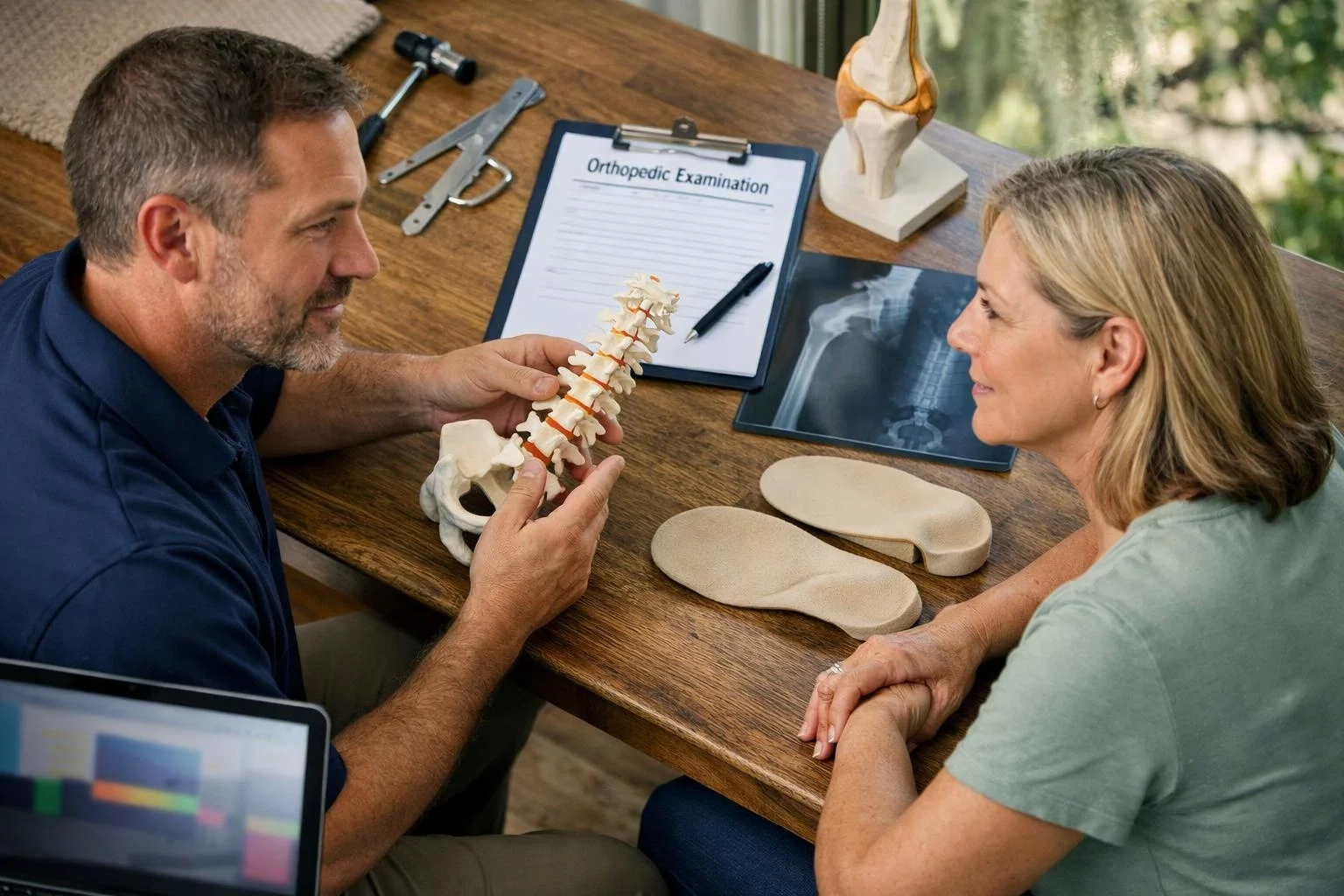
An orthopedic examination uses observations and physical tests to investigate a person's concern. The clinician asks about symptoms and watches how the person moves. The choice of tests depends on the area involved and the person's needs. Related service: Pediatric Chiropractic Care.
Related glossary terms: Range of Motion, Gait Analysis, Antalgic Gait.
A clinician may check range of motion by asking you to move a joint. The clinician may also gently guide the joint to see how it moves. Your description of any discomfort adds context to what the clinician observes.
Findings from the exam help guide the next part of an assessment. For example, limited shoulder movement may lead the clinician to look more closely at nearby muscles. An exam finding is a clue, and the clinician considers it alongside your history.

From the Arrowhead Clinic Chiropractor Savannah team
When we assess a child during pediatric chiropractic care, we consider the child's age and ability to follow directions. We explain each movement in simple language and listen to the child and caregiver. Their observations help us understand what we're seeing.
Orthopedic Examination in Practice: A Real-World Example
A child has trouble turning their head during play. During an orthopedic examination, the clinician asks the child to turn gently and notes any limited movement. The caregiver's description helps put that finding in context.
Related Services
Related Terms
Range of Motion
Range of Motion is the extent of movement available at a joint in a particular direction.
Gait Analysis
Gait Analysis is an assessment of how a person walks or runs.
Antalgic Gait
An antalgic gait is a walking pattern that develops when pain makes bearing weight uncomfortable.
Muscle Spasm
A muscle spasm is an involuntary contraction that makes a muscle tighten without your control.
Arrowhead Clinic Chiropractor Savannah
Have Questions About Orthopedic Examination?
Contact Arrowhead Clinic Chiropractor Savannah for practical guidance on Orthopedic Examination and related chiropractor work in Savannah.