Understanding Spinal Decompression
Spinal Decompression is a therapy used to treat conditions affecting the spine, particularly those involving disc problems or nerve compression. Unlike surgery, it's a non-invasive procedure that aims to relieve pressure on the spinal discs and nerves by gently stretching the spine. This stretching creates space between vertebrae, allowing herniated or bulging discs to retract and reducing pressure on nerves. The goal is to promote healing and reduce pain without the risks or recovery time associated with surgical options.
Related glossary terms: Disc Herniation, Nerve Compression, Chiropractic Care.
This treatment is often recommended for patients who have not found relief from other conservative treatments, such as physical therapy, medication. Or chiropractic adjustments. It is particularly useful for conditions like disc herniation, sciatica, spinal stenosis. And degenerative disc disease. While Spinal Decompression is not a cure-all, it can be an effective part of a broader treatment plan for managing chronic back or neck pain.
How Spinal Decompression Works?
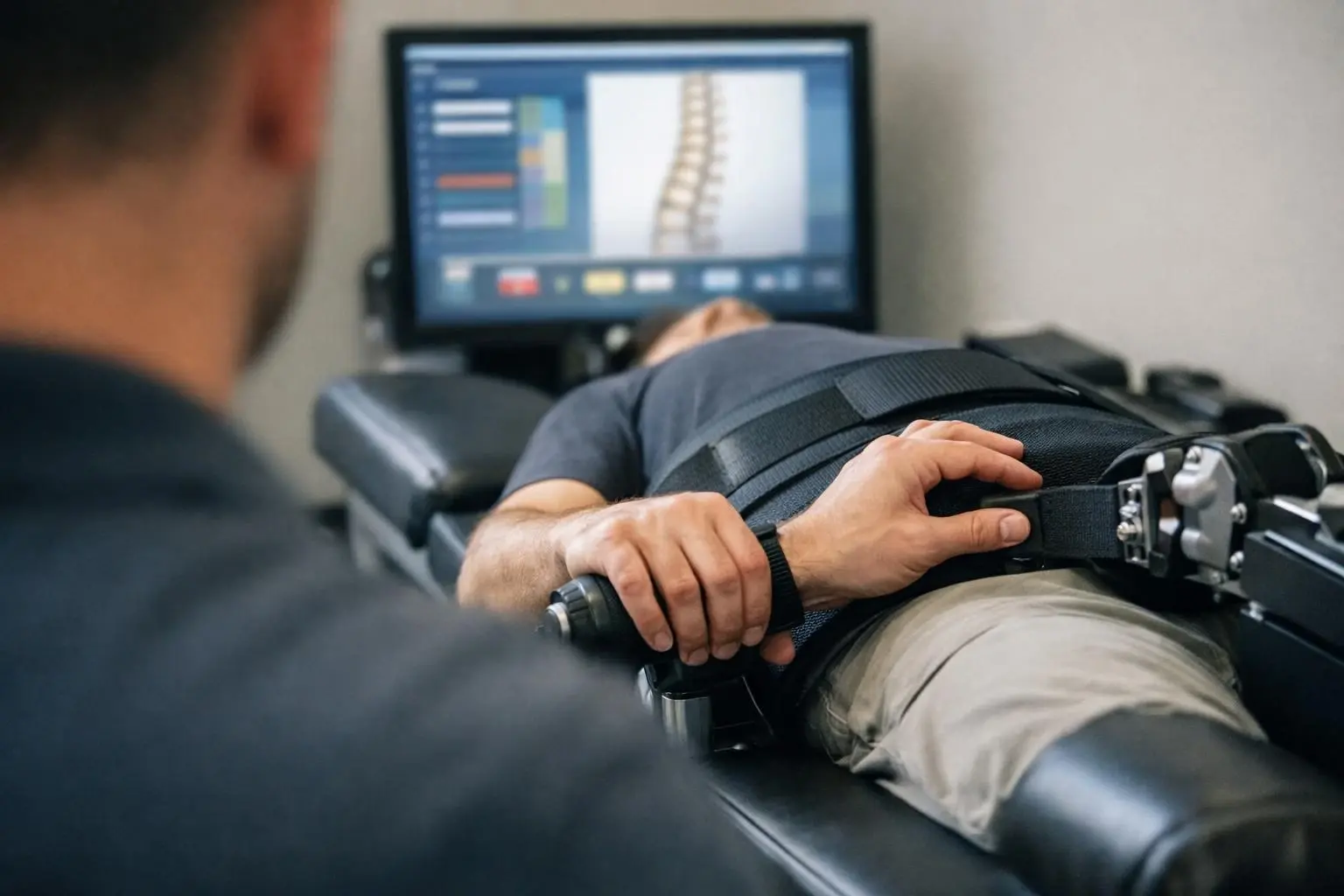
Spinal Decompression works by using a specialized table or device that gently stretches the spine in a controlled manner. The patient lies on the table, which is connected to a computer that customizes the stretch based on the patient’s specific condition. During the session, the table applies a gentle pulling force to the spine, creating negative pressure within the spinal discs. This negative pressure can help draw herniated or bulging disc material back into place, reducing pressure on nerves and promoting the flow of oxygen, water. And nutrients into the discs to aid healing.
The treatment typically lasts 20 to 45 minutes and is usually performed in a series of sessions over several weeks. Each session builds on the previous one, gradually increasing the stretch to achieve optimal results. Patients may feel a mild pulling sensation during the procedure. But it is generally not painful. Some patients experience relief after just a few sessions. While others may require more prolonged treatment to see significant improvement.
Why Spinal Decompression Matters?
Spinal Decompression matters because it offers a non-surgical option for patients suffering from chronic back or neck pain caused by disc issues or nerve compression. Surgery can be risky, expensive. And require lengthy recovery times, making non-invasive alternatives like Spinal Decompression an attractive option for many patients. By reducing pressure on the spine and promoting healing, this therapy can help patients avoid surgery and return to their daily activities with less pain and discomfort.
And Spinal Decompression can improve the quality of life for patients who have struggled with persistent pain. Chronic back or neck pain can limit mobility, affect sleep. And reduce overall well-being. By addressing the root cause of the pain—such as disc herniation or nerve compression—Spinal Decompression can help patients regain function and reduce their reliance on pain medications, which often come with side effects and risks of dependency.
When Spinal Decompression Matters Most?
Spinal Decompression is most beneficial for patients who have not responded to other conservative treatments, such as physical therapy, chiropractic care. Or medication. It is particularly useful for conditions like disc herniation, sciatica. Or spinal stenosis, where pressure on the nerves or discs is causing significant pain or dysfunction. Patients who experience radiating pain, numbness. Or weakness in their arms or legs due to nerve compression may also find relief with this therapy.
This treatment is not suitable for everyone, however. Patients with certain conditions, such as severe osteoporosis, spinal fractures. Or tumors, may not be good candidates for Spinal Decompression. What you need to know is for patients to undergo a thorough evaluation by a qualified healthcare provider to determine if this therapy is appropriate for their specific condition. In Savannah, GA, chiropractors and other healthcare providers may use Spinal Decompression as part of a full treatment plan for patients dealing with chronic spinal issues.