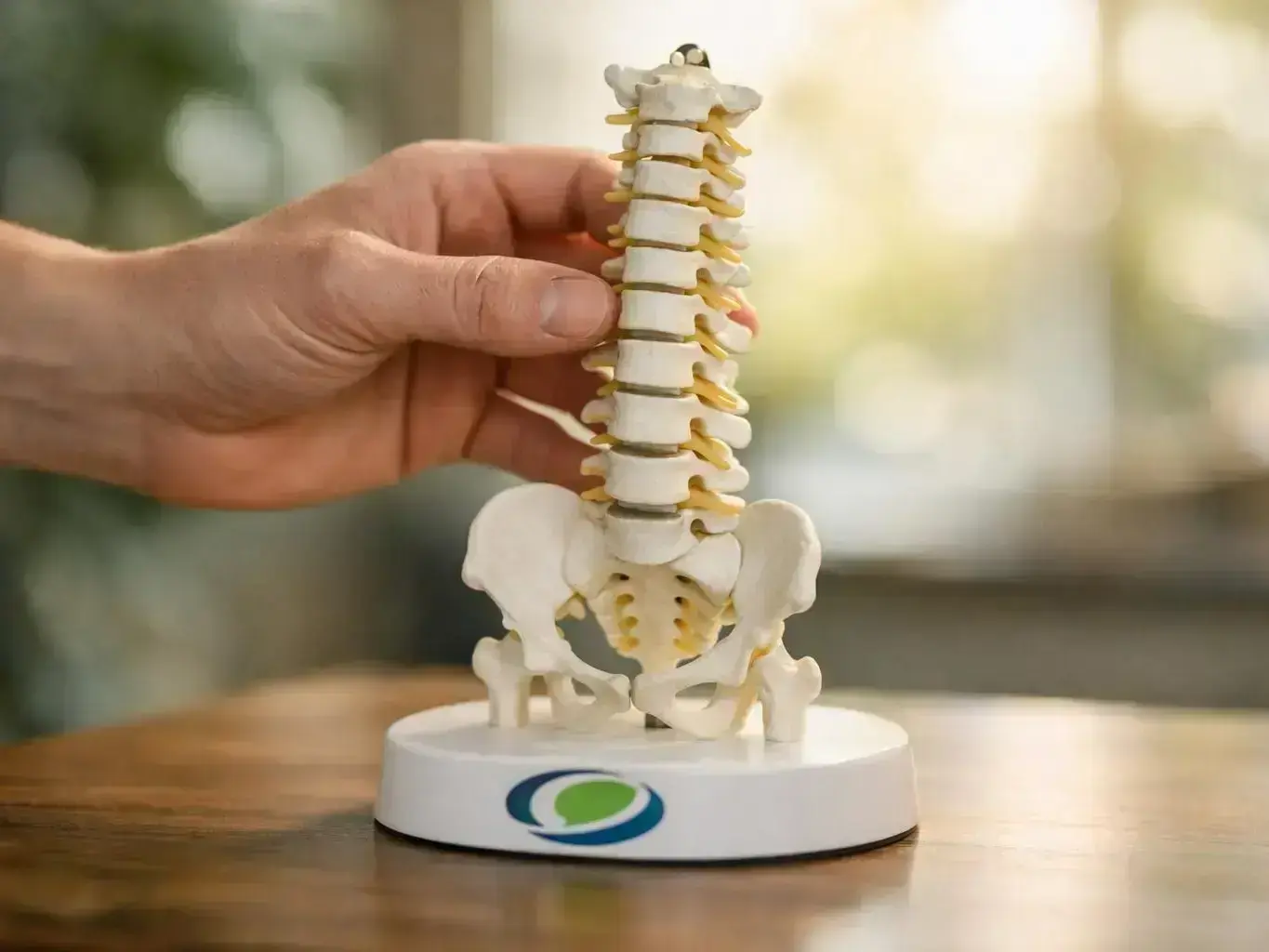
Understanding Nerve Impingement

Nerve impingement happens when something presses on a nerve. Bones, muscles. Or tendons can cause this pressure. It stops the nerve from working right.
Related glossary terms: Disc Herniation, Spinal Stenosis, Chiropractic Care.
This can cause pain, tingling. Or weakness. It may happen fast after an injury. Or it may happen slowly from bad posture or doing the same thing over and over.
Sitting too long with poor posture can hurt your lower back. This can lead to nerve impingement.
Nerves work like wires. They send signals from your brain to your body. When a nerve is pressed, the signals get mixed up or stopped.
This can cause pain or make parts of your body not work right. Where you feel it depends on where the nerve is pressed.
If it's in your neck, your arms may hurt or feel numb. If it's in your lower back, your legs may be affected. Knowing where and why it happens helps with treatment.
How Nerve Impingement Works?
Nerve impingement starts when tissues press on a nerve. Swollen muscles, hurt discs. Or crooked bones can cause this. A disc in your spine can bulge out.
This can press on a nerve and cause pain or numbness. Doing the same motion over and over can also swell muscles. This can squeeze a nerve, like in carpal tunnel syndrome.
Your body reacts with swelling. This can make the pressure on the nerve worse. Over time, this can cause long-term pain or weakness.
Doctors check your body to find the problem. They may use X-rays or MRIs (pictures of your body). They may also do nerve tests to see how bad it is.
These tests show where the nerve is pressed. This helps doctors decide how to treat it.
Why Nerve Impingement Matters?
Nerve impingement can change your daily life. Pain, tingling. Or weakness can make moving hard. This can make it tough to drive, work. Or exercise.
If not treated, it can hurt nerves for good. You may lose feeling or muscle use. Early care can stop this and ease pain.
This lets you get back to normal without discomfort. Nerve impingement can also affect your mind. Long-term pain can make you frustrated or anxious.
It can also make it hard to sleep. Treating it fast can make life better. It can also stop other problems like muscle or joint issues.
Knowing why nerve health matters helps you make good choices. This way, you can take care of yourself.
When Nerve Impingement Matters Most?
Nerve impingement matters when it affects work or sports. Office workers may feel numbness in hands from typing. This comes from nerve pressure in the wrist.
Athletes like runners may feel pain in legs. Weightlifters may feel arm pain. This comes from doing the same motions over and over.
Seeing symptoms early and getting help can stop it from getting worse. This helps people stay active. Nerve impingement also matters after accidents.
Car crashes or falls can press on nerves fast. This can cause sudden pain or weakness. Quick care can stop long-term damage and help you heal.
People with arthritis may get nerve impingement more often. Those with disc problems may too. They should watch their symptoms closely.